

Assahafa.com
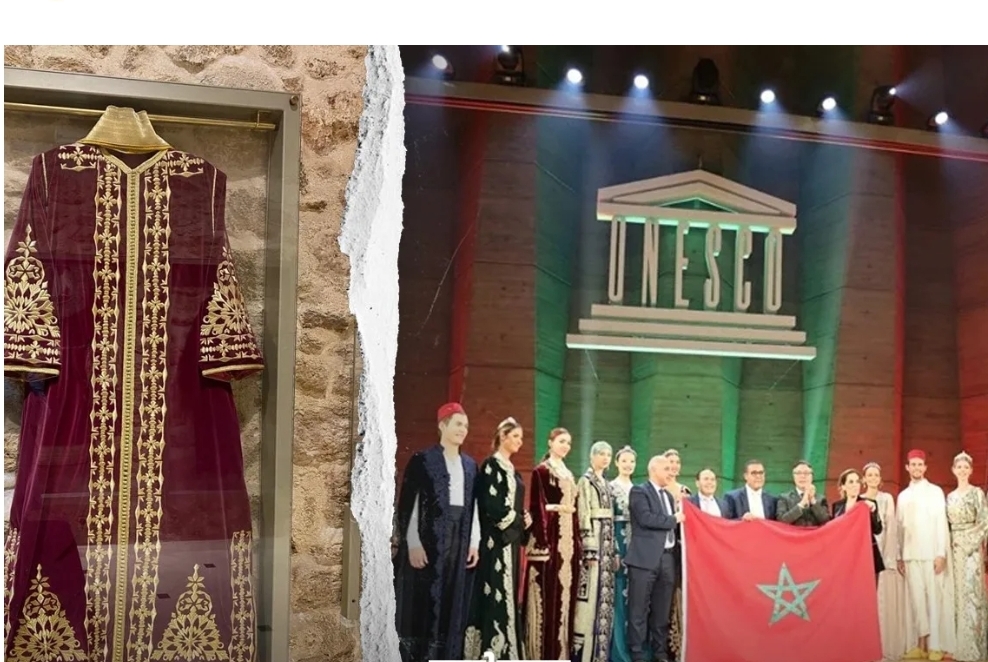
Morocco’s long-prepared bid to register the Moroccan caftan on UNESCO’s Representative List of the Intangible Cultural Heritage of Humanity has reached a decisive moment as the file will be officially examined this week.
It will take place between December 8 and 13 during the 20th session of UNESCO’s Intergovernmental Committee, held this year in New Delhi, India.
The file, titled “Art, tradition and savoir‑faire of the Moroccan caftan,” shows the historic, cultural, and artisanal depth of the caftan, including centuries‑old origins, regional variations, craftsmanship in weaving, embroidery, trimming, tailoring, and transmission through generations.
Already home to several UNESCO-listed intangible heritage elements, Morocco seeks to formally recognize the Caftan as a key symbol of its cultural identity and living traditions.
This move comes after years of efforts to safeguard the caftan’s authentic Moroccan identity, especially following repeated attempts by Algeria to claim it as part of Algerian heritage.
Algeria previously submitted to UNESCO a file on “women’s ceremonial costume in the Eastern region of Algeria: Knowledge and skills associated with the making and adornment of the ‘Gandoura’ and the ‘Melehfa,’” which illegally included images of the Moroccan caftan.
In May 2024, Morocco formally lodged a complaint at UNESCO, accusing Algeria of cultural appropriation of the Moroccan caftan, specifically the caftan nta’a el-Fassi. Morocco was successful in one recent UNESCO meeting in getting the image of the Moroccan caftan removed from the Algerian file.
Algeria is a member of this year’s UNESCO committee, which means it will be present during the vote. Algeria is expected to raise questions or objections, despite the strong evaluation the file has already received. The UNESCO evaluation body has confirmed publicly that the Moroccan file meets all five required criteria, a positive sign that usually leads to inscription.
For Morocco, through the Ministry of Youth, Culture and Communication and Morocco’s UNESCO delegation, this is not just a symbolic step, but it’s a way to give the caftan international recognition as living Moroccan heritage and to protect its artisans, their tradition, and future livelihood.
If approved, the caftan’s inscription would close a contentious debate over cultural appropriation. It would reaffirm that the caftan, with all its regional styles, techniques, and social uses, is rooted in Morocco’s history and identity, and belongs to the Moroccan people.
Source: Morocco word news