


Assahafa.com
Adraoui Abderrahmane
The certificate of excellence recently awarded to Sheikh Khalifa Hospital in Casablanca is, in our view, well deserved. It represents recognition of the efforts of hundreds of workers, employees, and medical professionals within the hospital, whose competence in healthcare is widely acknowledged.

During my visit to Morocco at the end of last year, I went directly from the airport to this hospital, where my mother was hospitalized in the intensive care unit. I visited her several times over the course of five days. What this article contains is a cry of protest against the dark side of the hospital—an aspect that no one has dared, until now, to address or discuss in our national media.
My mother was in a very critical health condition and was unable to speak. While holding her hand, I noticed extensive blue bruises covering it. When I asked about the cause, I was told that she had been trying to get out of bed and that, for fear she might fall and the medical team be held responsible, she had been tied to the bed. I was also told that she used to remove the intravenous lines delivering medication and nutrition, and that she was therefore restrained in a manner that left her hand bearing marks resembling those inflicted on a body subjected to torture.
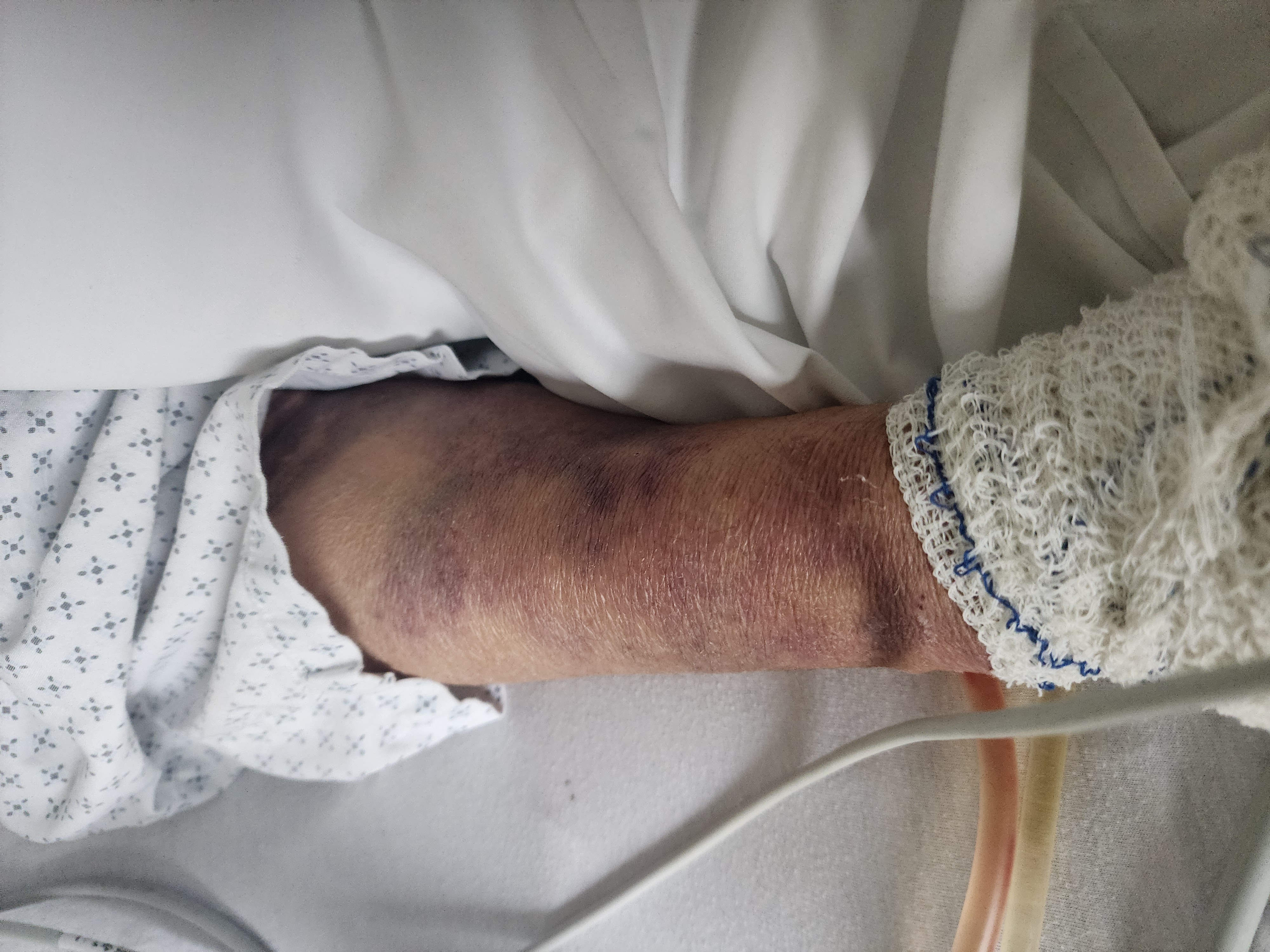
I experienced a deep internal collapse, especially since these actions were presented to me as normal, as though my mother had to pay the price for wanting to get out of bed and accept this form of psychological terror in the name of medical care. A hospital official even stated that such treatment was necessary in similar cases to ensure effective care.
I was reminded of American films depicting dangerous criminals brought to court in chains, and of how judicial and security authorities ensure that space is left between the restraints and the wrists or ankles to prevent injury.
Even punishment and conviction do not permit leaving bruises of any kind on the human body. How, then, has it become acceptable in our country to normalize a criminal assault on a patient’s body during medical treatment?
After several days, my mother’s condition began to improve and she slowly regained the ability to speak. I took the opportunity to ask her what had happened. She pointed out a male nurse at the hospital, describing him as despicable and stating that he was the one who tied her to the bed in a way that deprived her of any movement. She also spoke of a night-shift nurse who treated her kindly and tried to ease the psychological terror she endured during the day.
One day, while I was visiting her, that same nurse entered the room. My mother had been speaking comfortably with me, sharing amusing memories, and smiling. The moment she saw him, she stopped talking, her facial expression changed, and the man began speaking to her as if she were mentally unstable. The following is an excerpt of the exchange:
“Hello, ramamti, do you remember me? Do you know who I am? You don’t recognize me? This morning you called me by my name…”
My mother did not respond with a single word, merely staring at him with a look of utter disgust. Realizing the gravity of his actions, the nurse turned to me and said, “Visiting time is over; you must leave.”
Visiting hours for the intensive care unit are officially set between noon and 1:00 p.m.—an administrative decision often treated with blatant disregard. In many cases, the doors are opened twenty minutes late. One day, a citizen exploded in anger at the nurse responsible for opening the door. Her excuse was: “We were preparing the patients for visits.” An excuse worse than the fault itself.
The widely acknowledged excellence of surgeons in Morocco in general, and at Sheikh Khalifa Hospital in particular, is undermined by the behavior of some employees and nurses who lack the minimum professional qualifications for their duties. Many pretend to work while being absorbed in their smartphones, or engage in loud, trivial conversations within earshot of patients and visitors.
Medically speaking, my mother’s stay at Sheikh Khalifa Hospital was highly beneficial. She underwent two successful surgical operations and today enjoys good physical and psychological health. This was made possible only by doctors and surgeons of a very high level of expertise. Our hope is that the quality of services and nursing care will evolve to match the high standard set by our physicians.
On the last night my mother spent in the hospital, she was placed in a monitored room. My sister stayed with her that night. After midnight, she checked the urinary bag and found it completely full. She called the nurse in charge to ask why it had not been changed. He replied that he would order its replacement immediately.
This raises a troubling question: what was happening during the nine nights my mother spent alone? Was she truly receiving the level of care she deserved, apart from the commendable work of doctors and surgeons? The bruises on her hand say it all.