
Assahafa.com
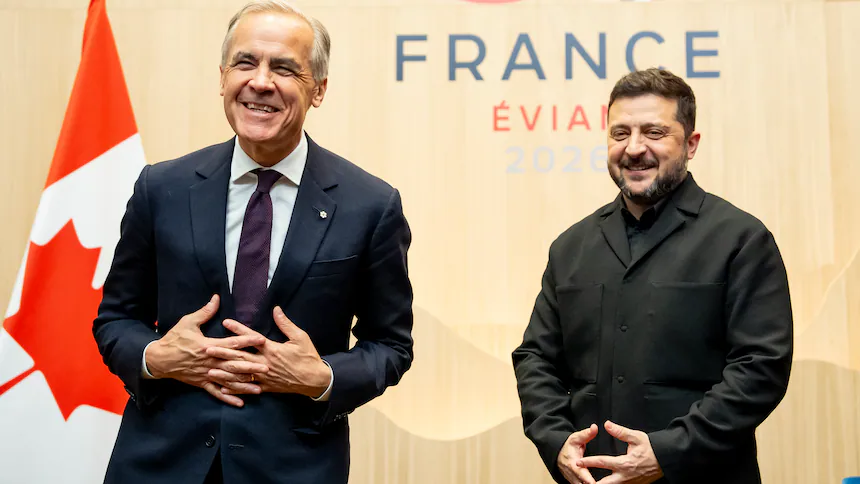
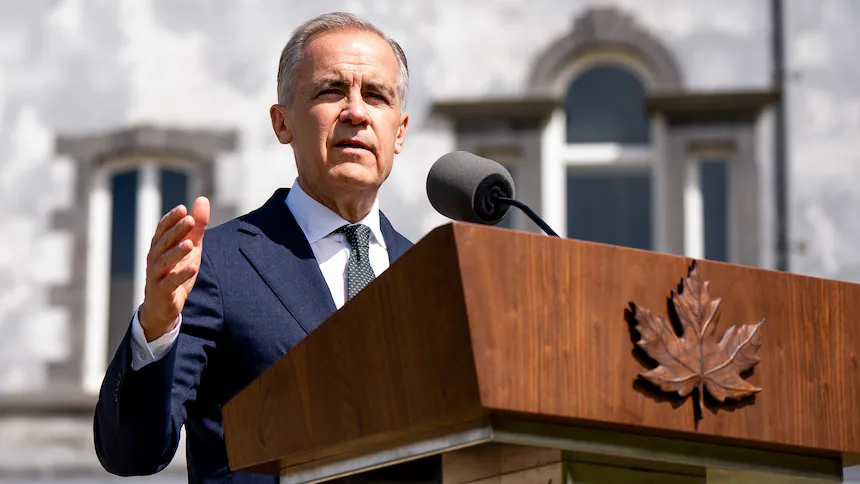
Prime Minister Mark Carney may not have a bilateral meeting planned yet with U.S. President Donald Trump, but a hot microphone caught them talking about trade at the G7 leaders’ summit in Évian-les-Bains, France.
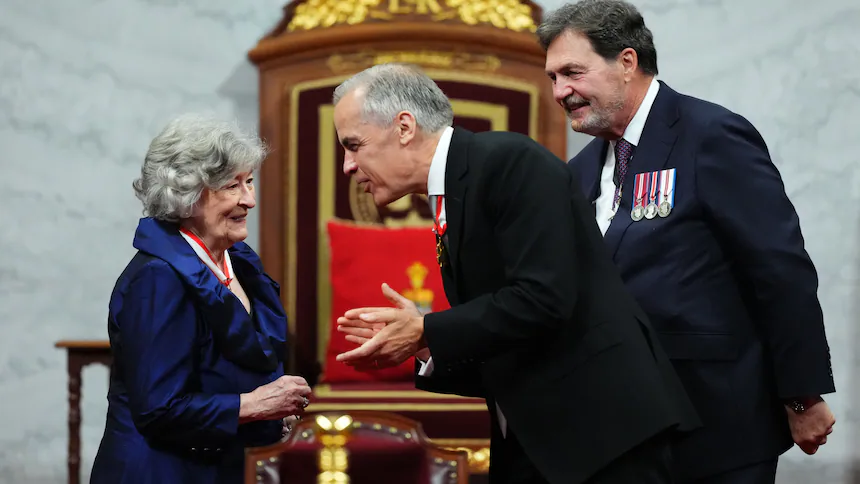
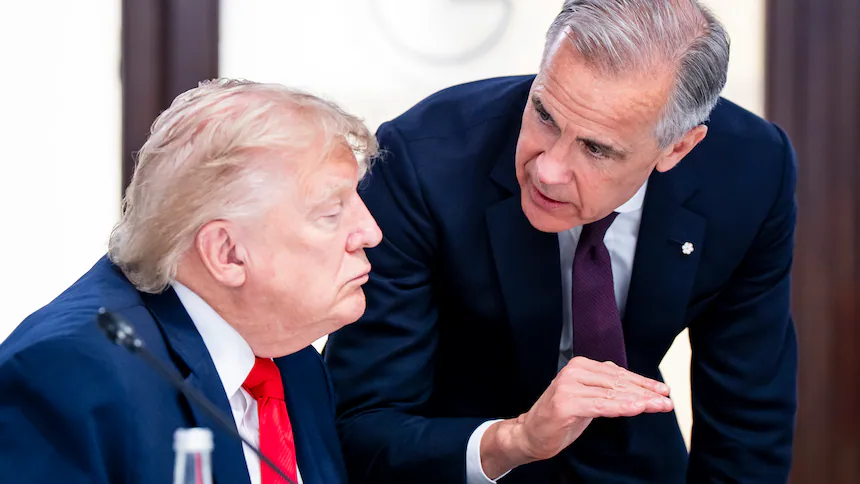
Carney can be seen on camera, leaning in to talk to Trump, who was sitting at the leaders’ table ahead of a working luncheon.
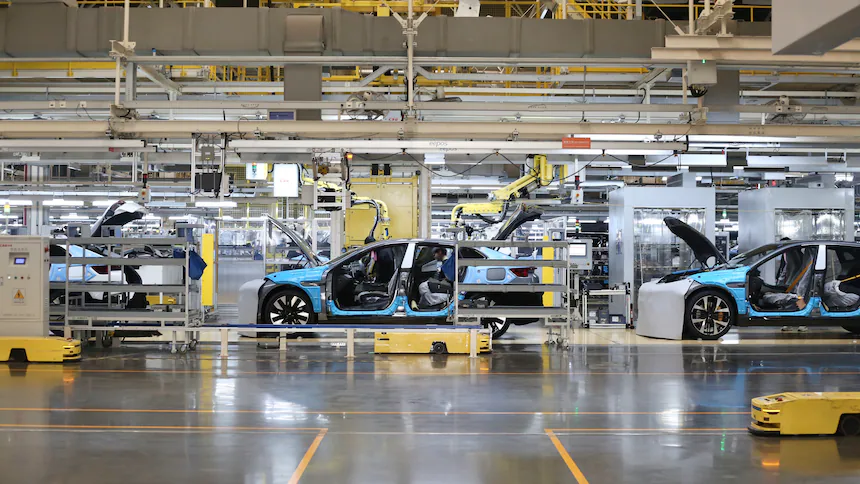
A microphone in the room faintly picks them up, apparently talking about Canada’s recent agreement with China to allow a small number of Chinese EVs into the Canadian market at a lower tariff rate.
A microphone caught Prime Minister Mark Carney and U.S. President Donald Trump talking about Chinese EVs at the G7 leaders’ summit in Évian-les-Bains, France on Monday. The microphone in the room picked up the two leaders discussing Canada’s recent agreement with China to allow a small number of Chinese EVs into the Canadian market at a lower tariff rate.
The move has frustrated the Americans, who have a 100 per cent tariff on all Chinese EVs in a bid to protect their domestic auto market. Canada also imposed a 100 per cent tariff on Chinese electric vehicles in 2024, but now allows up to 49,000 Chinese EVs into Canada annually at a 6.1 per cent tariff.
Carney is heard saying “less than three per cent of our market, 49,000 cars,” in apparent reference to how many vehicles are allowed to be imported in Canada at the lower rate.
He makes a horizontal motion with his hand, signifying a limit, while saying there’s “a cap, we capped, a hard line” and then is heard telling Trump, “I thought you’d actually like that.”
Trump, sitting, responds, “That’s good. I like that.”
Canada and China announced a deal to allow some EVs into the Canadian market at the same time Beijing dropped some tariffs on Canadian canola.
Though the number of vehicles does represent three per cent of the Canadian auto market, the move was panned by some in the industry.
In a statement, Canada’s big three automakers — Ford, General Motors and Stellantis — said the entry of these EVs “undermines” the domestic auto industry and opens Canadians up to “cyber risks.”
“China does not adhere to many of the rules-based trade and investment principles that have been fundamental to the success of the auto industry and the Canadian economy,” said Brian Kingston, president and CEO of the Canadian Vehicle Manufacturers Association.
The deal has also prompted criticism from American officials. In February, U.S. Transportation Secretary Sean Duffy said Canada would “regret” bringing Chinese EVs into its market.
When asked for comment, the prime minister’s office said it had nothing to add. Carney has made similar comments about the Chinese EVs publicly in the past.
Trade talks at G7
Though the G7 leaders’ summit has been dominated by talks on global conflicts, Canada has sought to bring up trade with the United States.
U.S. Canada Trade Minister Dominic LeBlanc is set to meet with his counterpart, U.S. Trade Representative Jameson Greer. Canada’s chief negotiator Janice Charette is also planning to attend the meeting. Canadian trade representatives were also present at the 2025 G7 meeting in Kananaskis, Alta.
Sources tell CBC News that Canada has requested a formal bilateral meeting with Trump in France, but no meeting has been announced.
Canada’s ambassador to France, Nathalie Drouin, said informal conversations happen regularly between the two leaders.
“Carney and Trump, they have never stopped talking to each other. And of course they will talk to each other,” she said at the G7.
This conversation between Trump and Carney takes place ahead of a key date for the North American free trade agreement, known as CUSMA, which enters a renewal period starting July 1.
July 1 does not mark the expiration of CUSMA, but rather the start of a renewal window. This gives the three parties a chance to iron out irritants and the option to renew the pact for another 16 years.
Carney told reporters on Friday that he has been told the U.S. administration does not want to change the agreement to the extent that it has to go back to Congress.
“The U.S. has been clear that they do not want to go to Congress to change the fundamental architecture,” he said in Dublin.
Source: cbc