
Assahafa.com
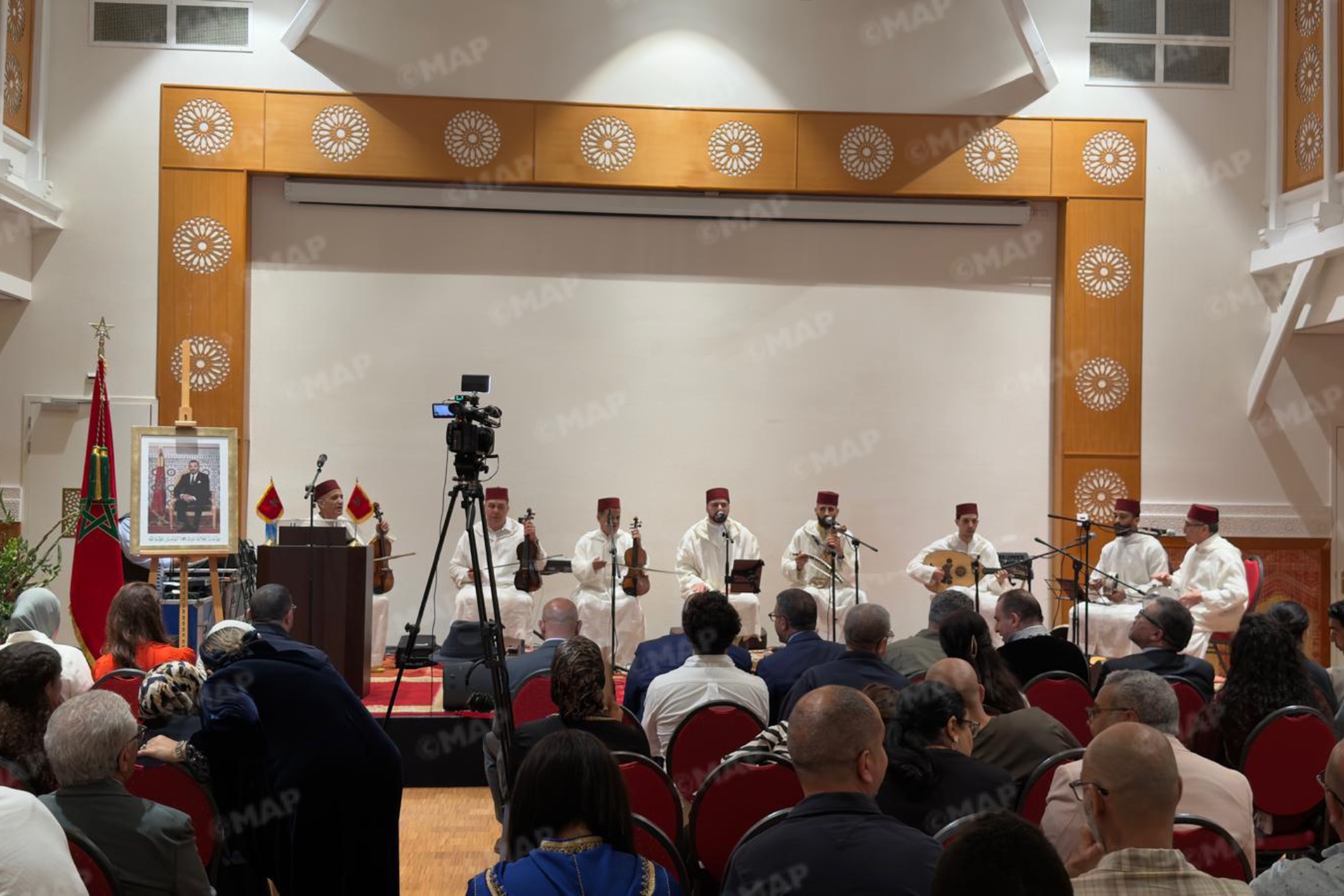
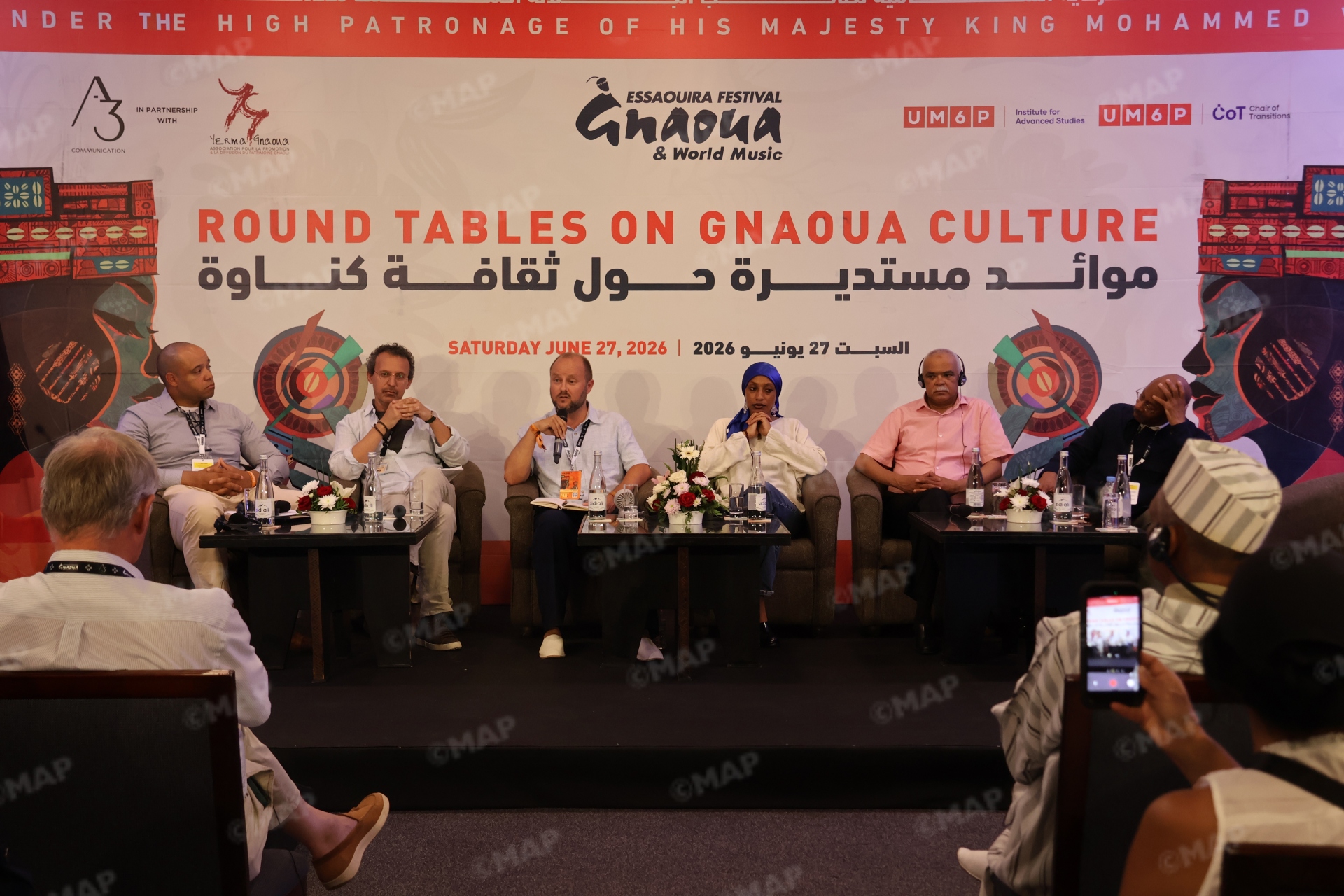
Gnaoua culture, rooted in a unique history yet extending far beyond its places of origin, was the focus of discussions on Saturday in Essaouira, where a panel of researchers, anthropologists, historians, artists, musicians, and practitioners explored the sources of its universality and its ability to reinvent itself without losing its essence.
Organized as part of the 27th Essaouira Gnaoua and World Music Festival, this event is part of the partnership between the Festival and Mohammed VI Polytechnic University (UM6P), through the “Chair of Transitions,” with the aim of fostering dialogue between academic research, intangible heritage, and artistic creation around the major cultural, social, and human transformations shaping our era.
Held under the theme “Gnaoua: Between Singularity and Universality,” this event— attended by Advisor to His Majesty the King and Founding President of the Essaouira-Mogador Association André Azoulay, festival producer Neila Tazi and other prominent figures— highlighted the richness of Gnaoua culture, a tradition rooted in historical connections linking Morocco, sub-Saharan Africa, the Maghreb, the Arab world, and other cultural regions.
Speaking during a panel discussion titled “Gnaoua in the Diaspora: Origins, Inventions, Dispersions?”, Moroccan-American political scientist, music critic, and filmmaker Hisham Aidi provided an overview of the profound historical interactions between Gnaoua culture and other arts, cultures, and musical genres—particularly jazz—noting that this convergence arose from cultural exchanges between Morocco, Africa, Europe, and the United States, long before it left its mark on the international music scene.
For his part, R.A. Judy, an American professor of critical and cultural studies, advocated for a renewed interpretation of Gnaoua culture, situated within a broader history of African and Afro-diasporic exchanges, noting that the interactions between the musical traditions of the Gnaoua, Stambali, Diwan, and Zar attest to a shared cultural heritage that transcends national borders and conventional academic categorizations.
In turn, writer, cultural historian, and religious scholar Nathan Chapman Lean (USA) offered reflections on the concept of diaspora, which he presented as a dynamic of continuous creation and reinvention rather than merely a preservation of the past.
Echoing this sentiment, American Africanist, historian, and writer Kai Mora urged attendees to view the Gnaoua diaspora as a “vast network of cultural kinships rather than as a tradition tied to a single, clearly identifiable origin.”
Drawing on her research on musical instruments, Mora cited numerous connections between the guembri and several West African instruments, notably the Malian ngoni, the Senegalese xalam, and the American banjo, “all of which attest to the depth of cultural exchanges between Morocco, the Maghreb, sub-Saharan Africa, and the Americas.”
After examining the historical trajectories and transnational circulations of Gnaoua culture, participants shifted their attention to its ritual, symbolic, and therapeutic dimensions during a second panel titled “Trance, Ritual, and Healing: Gnaoua and the Question of Ritualized States of Consciousness in Contemporary Societies.”
Alongside the Human Rights Forum, the Berklee at Gnaoua and World Music Festival program as well as numerous initiatives focused on knowledge transmission, creation, and reflection that punctuate each edition of the Festival, the “Chair of Transitions” continues the work undertaken around Gnaoua culture and its many contemporary resonances.
Source: map