

Assahafa.com
The Danish Embassy in Morocco hosted a reception on Monday evening to celebrate a major milestone in Danish-Moroccan economic cooperation after the successful final closing of A.P. Moller Capital’s Morocco-focused transport and logistics investment fund.
The event brought together government officials, investors, business leaders, and institutional partners to mark the launch of a significant new pool of capital to support Morocco’s growing transport and logistics sector.
The fund, managed by APM Capital Morocco, has secured commitments totaling MAD 1.64 billion ($178 million). An additional MAD 600 million ($65 million) from A.P. Moller Capital’s Danish Emerging Markets Infrastructure Fund II brings the total amount available for investment in Morocco to MAD 2.24 billion, or approximately $243 million.
Beyond the numbers, speakers at the reception stated that the fund represents a deeper strategic partnership between Morocco and Denmark at a time when Morocco is positioning itself as a major industrial, logistics, and investment hub connecting Europe and Africa.
More than capital
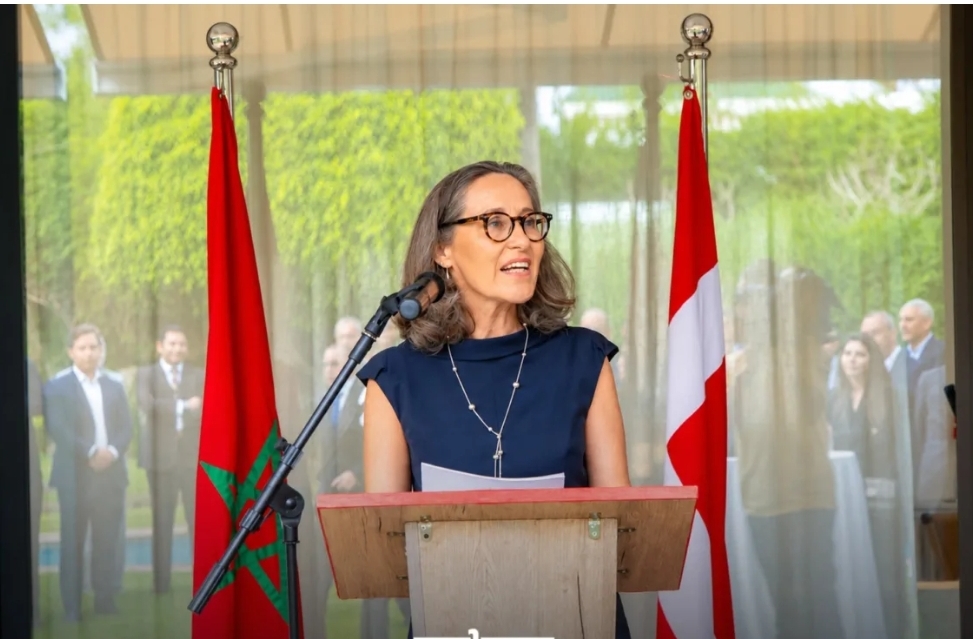
Speaking to Morocco World News (MWN) on the sidelines of the reception, Danish Ambassador to Morocco Berit Basse described the closing of the fund as a significant moment in bilateral relations.
“The closing of this fund is considerable. It’s $243 million,” she said. Basse added that it reflects the growing “confidence of international investors in Morocco and investments in Morocco and huge opportunities for the future strengthening of our partnership.” She said the investment demonstrates Denmark’s long-term commitment to Morocco and highlights opportunities for further cooperation in the years ahead.
According to Basse, the investment goes beyond financing infrastructure projects. She argued that foreign direct investment creates broader economic benefits by encouraging innovation, increasing productivity, creating jobs, and strengthening local competitiveness.
She pointed to the growing presence of Danish companies and investors in Morocco, including Vestas, Copenhagen Infrastructure Partners (CIP), A.P. Moller Capital, and other Danish-backed initiatives involved in renewable energy, logistics, and infrastructure projects.
“They bring innovation, they bring jobs, job creation, they contribute to sharpened competitiveness and increased productivity,” she said. “I see it like rings spreading in water.”
The ambassador also noted the role such investments can play in creating opportunities for small and medium-sized enterprises that can benefit from partnerships with larger international investors.
A relationship built on trust
Speaking to attendees at the reception, Basse connected the modern partnership between Denmark and Morocco to centuries of maritime trade and cooperation. She noted that while global trade has evolved dramatically, from traditional shipping routes to automated ports and digital supply chains, one key element remains unchanged.
“Partnerships are still built on trust, and that is exactly what we celebrate tonight,” she said.
Basse lauded Morocco’s economic transformation over recent years, describing the country as one of the region’s “most ambitious industrial and infrastructure platforms.” “From Tangier Med to world-class renewable energy installations, and a booming industrial economy, Morocco is going through a transformative era,” she told attendees.
She pointed to major investments in transport, logistics, energy, tourism, and human capital as evidence of Morocco’s broader development strategy.
For Denmark, she said, supporting this transformation involves not only private-sector investments but also a wider network of public financial institutions and development tools aimed at supporting sustainable growth in Morocco and across Africa.
The fund arrives as Morocco continues to strengthen its position as a regional logistics gateway. Over the past decade, the country has invested heavily in ports, highways, rail networks, renewable energy projects, and industrial zones designed to attract international businesses and manufacturers.
Morocco’s strategic location between Europe and Africa has increasingly made it an attractive destination for companies looking to diversify supply chains and benefit from nearshoring trends.
The new fund is specifically designed to invest in transport and logistics businesses across the country, with a pipeline that includes international express logistics, third-party logistics services, air cargo handling, and cold-storage infrastructure.
These sectors are expected to play a growing role as Morocco expands exports, strengthens industrial production, and prepares for future economic growth. The country’s preparations for the 2030 FIFA World Cup are also expected to accelerate infrastructure development and increase demand for efficient logistics networks.
“In 2030, Morocco will not only host the FIFA World Cup, but it will also showcase to the world a modern and connected country,” Basse said. “This transformation creates opportunities for partnership that extend far beyond the one event.”
Long-term commitment
For A.P. Moller Capital, the fund builds on a long history of engagement in Morocco. Speaking to MWN, Managing Partner and CEO Kim Fejfer said the firm’s objective is to support the development of critical infrastructure needed to sustain Morocco’s economic growth.
“Our reason for having this investment fund in Morocco is really to help with the development of critical transport infrastructure,” he said, adding that the fund will focus on projects that strengthen supply chains and facilitate the movement of goods across the country.
The fund will focus on critical transport and logistics infrastructure, including warehousing, ports, rail networks, and cold-chain facilities, among other projects. The company evaluates infrastructure needs by looking at long-term trends such as urbanization, demographic growth, trade patterns, and rising consumer demand.”
“We look at the supply chain end to end,” Fejfer said. “So it can vary between cold-chain logistics, air cargo logistics, ports, trucking, railroads.”
He stated that partnerships are central to the company’s approach, with investments typically developed alongside governments, local authorities, and private-sector partners.
“Our business model is very much to work in partnership with different stakeholders,” he explained. “But of course, for us as a global operator of transport, we bring international expertise into the business here.”
Building on success
In his remarks at the reception, Fejfer recalled the broader history of the A.P. Moller Group in Morocco. He noted that the relationship stretches back more than a century, beginning when the Maersk vessel Jagd Maersk first arrived in Casablanca in 1924.
Since then, Danish involvement in Morocco’s transport sector has grown considerably. One of the most significant milestones came in 2007 when APM Terminals was selected to develop the first phase of the Tangier Med container port.
Today, Tangier Med is one of the world’s leading logistics hubs and one of the Mediterranean’s busiest container ports.
“Together with Moroccan partners, we now operate a major transshipment hub handling more than 10 million containers a year, making it the leading port in the Mediterranean and Africa and one of the five most productive container ports in the world,” Fejfer said.
The company has also invested in Morocco’s grain logistics sector through its partnership in Mass Céréales Al Maghreb, an investment that was successfully exited in 2025.
These experiences, Fejfer suggested, have reinforced confidence in Morocco’s long-term economic prospects.
“We have seen macroeconomic fundamentals strengthen, supported by rising nearshoring activities, sustained public investments in infrastructure, and clear evidence that Morocco is positioning itself as the leading logistics hub for North Africa, connecting Europe and Africa,” he said.
The fund itself is the result of a partnership between A.P. Moller Capital, Morocco’s Mohammed VI Investment Fund (FM6I), and several Moroccan and international institutional investors.
Fejfer commended the role of the FM6I in helping attract both domestic and international private capital. “FM6I has had a great vision to catalyze international and local private capital,” he said.
The partnership reflects Morocco’s broader strategy of using public investment mechanisms to mobilize private-sector financing for key development priorities. In addition, the final closing sends a strong signal to investors that Morocco continues to attract international confidence despite an increasingly competitive global investment environment.
Source: Morocco word news