

Assahafa.com
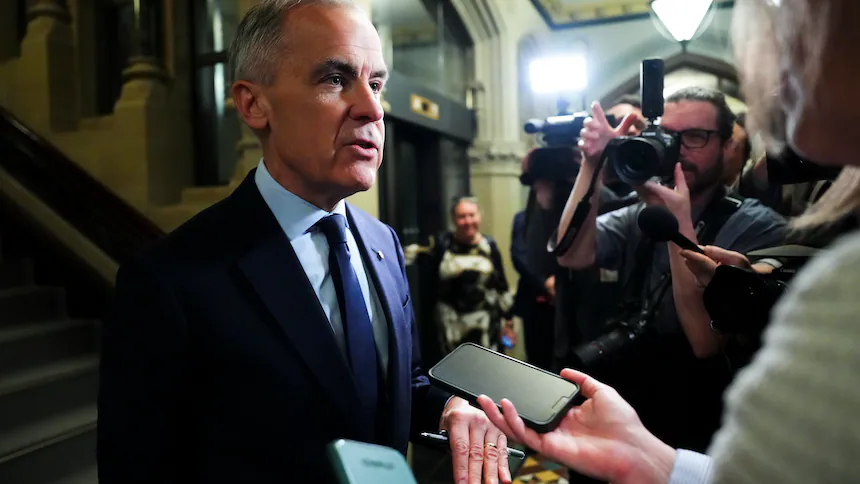
The Carney government is planning to propose changes to make it easier for natural resource projects — including pipelines — to be approved and built faster.
Two federal sources say an announcement is planned for later this week that could shift the regulatory framework for all natural resource and federally regulated major projects, with a big focus on energy and natural resources.
CBC News is not naming the sources because they were not authorized to speak publicly about internal conversations. The full details of the plan were not shared with CBC News, and sources warned elements of it are subject to change.
The sources described the plans as being in line with the Carney government’s promise to have one review per project, and to have a two-year decision timeline to approve major projects.
The plans are expected to include proposed “comprehensive” changes to processes, and as a result, the government will announce consultations ahead of passing required legislation.
The sources said pipelines will be easier to build, but this does not eliminate the mandatory consultation with Indigenous people. They said industry will likely be pleased, but environmentalists may be less so.
This is set to be a different process than what was established in the passage of C-5, a bill that allowed lawmakers to overrule regulations in order to fast-track projects of national importance. These changes would affect all projects, regardless of whether they are on a list.
Why are Alberta energy negotiations taking so long?
This comes as the federal government is in the throes of trying to negotiate a deal with Alberta to fulfil the terms of last year’s memorandum of understanding (MOU), which include language to build a pipeline to the West Coast.
Some federal and provincial sources say there is optimism that a deal can be struck on the main sticking point — the rate at which the industrial carbon price will rise — though both sides are unsure whether it can happen when Premier Danielle Smith meets with the prime minister this Friday.
Mark Carney is preparing sweeping changes to speed up approvals for natural resource projects, including pipelines, according to federal sources. A new framework could be announced this week.
The MOU called for a minimum effective credit price of $130 per tonne, but gave no timeline on when that threshold would be reached. The two sides were supposed to hammer out details ahead of April 1.
Right now carbon credits in Alberta are trading at about $40, well below the current headline price of $95 per tonne.
One senior Liberal source with knowledge of the negotiations said Alberta wants the $130 per tonne figure to be the ceiling until 2050, but Ottawa wants it to be the floor from which it will increase in years to come.
Smith is set to meet Carney during a visit to Ottawa, where she will be among several prominent Canadian Conservatives speaking at the Canada Strong and Free Network Conference.
‘We’re making progress,’ Smith says
Late last month, she described the sticking points in the negotiations.
“We’re making progress,” she said. “The broad brush strokes of what we’re aiming for is in the MOU and the effective price of 130. It’s just a matter of how quickly we get there.”
She said the other sticking point is around the idea of “contracts for differences,” which was not explicitly referenced in the MOU.
Contracts for difference are a measure that would make it extremely difficult or expensive for future governments to eliminate carbon pricing. Doing so would leave them on the hook to repay companies millions of dollars for investments in low-carbon projects.
“The prime minister clearly felt that’s one way to get to effective pricing. We have to make sure those contracts for differences don’t end up costing the industry or Alberta taxpayers or ratepayers a significant amount of money,” Smith said.
“We have a little experience with contracts for differences that have demonstrated you have to be very careful about how to draft that language.”
Clean Energy Regulations
The future of Clean Electricity Regulations (CER) is also in play as negotiations drag on. The MOU states that “upon completion of the new carbon pricing agreement … Canada will place the CER in Alberta in abeyance.”
The federal electricity regulations were supposed to achieve a net zero power grid by 2050 and have the biggest impact in Alberta. They would displace nearly 214 million tonnes of pollution. That’s equivalent to removing the tailpipe emissions of more than 49 million cars.
The MOU suggests a strengthened Alberta TIER system and “other measures” would help the province achieve the same emissions reductions as the electricity regulations.
But with both sides unable to strike a deal on carbon pricing, sources raised concerns about whether both sides can reach a made-in-Alberta solution that effectively drives down pollution from the province’s electricity sector.
For years, officials at Environment and Climate Change Canada studied whether a strong enough price on emissions alone would be enough to put the country on track to achieve its climate targets.
The answer that emerged from modelling is, on its own: no.
Source: cbc