

Assahafa.com
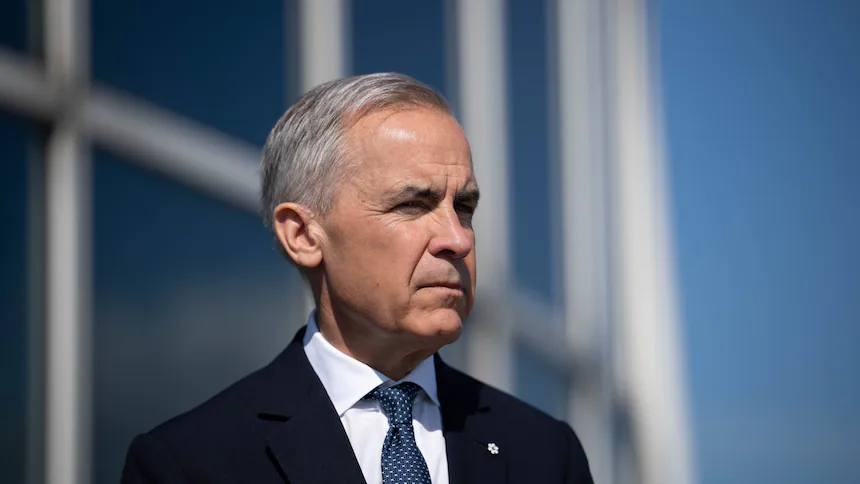
In B.C. to meet with the province’s premier who is skeptical of another oil pipeline, Prime Minister Mark Carney said the world is in the throes of an “energy crisis” and Canada must do its part to supply it with the natural resources it needs.
Speaking to a largely business audience at the Greater Vancouver Board of Trade before sitting down with Premier David Eby on Wednesday, Carney said recent global shocks have threatened the availability of some forms of energy, putting other countries in a bind.
He said Ottawa wants to move quickly to supply those resources, and if B.C. stands opposed to more development, his government will “be spending more time elsewhere in the country.”
Carney framed his plan — to fast-track project approvals, rework clean energy policies and back a new oil pipeline to the Pacific — as a way Canada can help fill the global energy void, and in turn grow the economy here at home at a time when the U.S. trade war has torpedoed some sectors.
“Unlike many countries, Canada can be part of the solution, for the world, for ourselves,” he said. “Canada is a stable, reliable partner in a world that is anything but.”
While mindful of what he called the “existential challenge of climate change,” Carney said abundance and affordability are also top of mind for his and other governments as the conflict in Iran dramatically drives up fuel prices and takes some supply, including a significant portion of Qatar’s gas, offline.
He branded those issues a “three-dimensional energy crisis.”
Prime Minister Mark Carney said Canada, ‘unlike many countries,’ can be part of the solution to what he called a global ‘energy crisis.’
“In a rapidly changing world, Canada must become the source of our own affordable, clean, reliable power because when we master energy, we master our destiny,” Carney said.
Eby has been critical of the memorandum of understanding Carney cut with Alberta Premier Danielle Smith.
Before visiting with Carney, Eby said Tuesday that the prime minister was rewarding Smith, who he called a “separatist premier,” and her “bad behaviour” by tweaking the industrial carbon tax regime and backing her push for a pipeline to the West Coast. Eby is diametrically opposed to oil infrastructure through northern B.C.
Mindful of that opposition and pushback from some First Nations and climate activists, Carney told the Vancouver audience that a pipeline will only proceed if the Pathways carbon capture and storage system is built to lessen emissions.
While he previously said “the government of British Columbia has to agree” to a pipeline before it goes ahead, Carney said Wednesday that another prerequisite is that the province “share substantial economic and financial benefits” from the project, without explicitly mentioning their agreement. He said Indigenous peoples must be consulted and that economic benefits should flow to them, too, if this new oil artery goes ahead.
In a fireside chat after his speech, Carney said this pipeline and the myriad of other natural resource projects now being studied are designed to make Canada “more independent” as the U.S. trade war drags on.
Eby has criticized the federal government for devoting so much time to the Alberta pipeline proposal. Carney countered that today by saying nearly one-third of the major projects his government has fast-tracked for approval come from B.C.
Carney warned that if sustained opposition to more development in the province continues, Ottawa will have to focus on projects in other provinces.
“If things get stalled here, we’re going to be spending more time elsewhere in the country,” Carney said.
“We need to move forward. We need to invest at scale in the country. For all the reasons I mentioned, affordability, sustainability, independence and prosperity,” he said, repeating what has become something of a mantra.
While Eby remains a northwest coast oil pipeline foe, he has promoted natural gas development, notably LNG Canada’s Phase 2 expansion, which Ottawa also supports and has put on the major projects list, as well as some mining in the province.
Later, as the two sat down for a meeting, Eby told Carney before the cameras that he wants B.C. to have its “fair share of federal investment” and “B.C. priorities” addressed.
B.C. Premier David Eby told Prime Minister Mark Carney on Wednesday that project development in his province ‘has to go hand-in-hand’ with environmental protection, including a moratorium on oil tankers. The two met days after Ottawa and Alberta signed an energy agreement that could see construction of an oil pipeline to the West Coast start as early as September 2027.
He said Canada’s renewed focus on energy development “has to go hand-in-hand with environmental protection,” and added that any move to lift the oil tanker ban that applies to the north coast of the province is a non-starter.
While there’s tension over a pipeline he really doesn’t want, Eby ended on a friendly note.
“There’s no doubt in my mind that the prime minister is a friend to B.C.,” he said.
Conservative Leader Pierre Poilievre said that, despite Liberal claims, the government isn’t moving fast enough to get Canadian energy out of the ground and to markets overseas.
In a video posted to his social media Wednesday that shows him jogging, Poilievre tells the Liberal government “we just got to get running” and build things more quickly by dismantling the industrial carbon tax and doing away with onerous reviews.
“Let’s sweep those things away,” he said.
Referencing Germany’s quick decision to build a new LNG import facility after weaning itself off Russian oil following Russia’s full-scale invasion of Ukraine, Poilievre said Germany “had to break its dependence on this aggressive neighbour,” and Canada should do the same given its current circumstances.
“You ever been out for a run and told yourself that you were running as fast as you could? Nah. If you’re being chased by a bear you could run faster still,” he said.
Source: cbc