
Assahafa.com
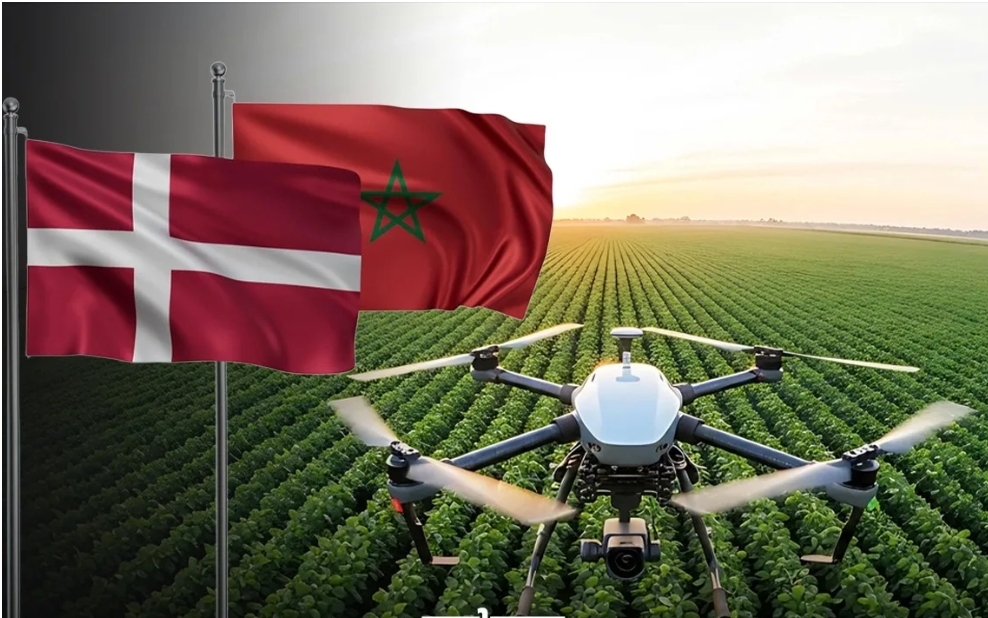
A Danish agro-industrial delegation is set to visit Agadir in early June in a sign of growing interest in Morocco’s farming and food-processing market.
The visit was organized by the Danish Embassy in Morocco together with Landbrug & Fødevarer, the Danish Agriculture and Food Council. The organization represents one of Denmark’s largest industries, with exports of around €22 billion annually and thousands of members and companies across the food and farming sector. It also works on food production, research, trade, environmental policy, and animal welfare.
The trip will bring together a group of Danish companies with products aimed at agriculture, food processing, energy use, and industrial infrastructure. Among them are Cimbria, Orana, BLÜCHER, Danfoss, SEGES Innovation, and Engsko.
Their profiles point to the kinds of sectors Denmark wants to push in Morocco. These include seed handling, grain storage, fruit ingredients, energy efficiency, drainage systems, digital agriculture, and milling equipment.
Cimbria focuses on equipment for processing, moving, sorting, and storing bulk materials, especially in agriculture and seeds. Orana makes fruit-based ingredients for the food and beverage industry.
Meanwhile, BLÜCHER develops stainless steel drainage systems for buildings and the food industry, and Danfoss sells energy-saving heating, cooling, automation, and renewable energy solutions.
SEGES Innovation works on sustainable farming, digital tools, testing, and research, while Engsko makes stone mills and milling systems for grains and legumes. Together, these companies reflect a practical pitch. Denmark is offering tools that can raise efficiency and improve quality across the food chain.
Agricultural challenges
The timing matters, as Morocco’s farm sector is still grappling with structural water stress following several years of severe drought and higher food costs, even though the recent rainy season has brought partial relief to some regions. The country continues to invest heavily in desalination plants, water-transfer projects, and new dams, while also restricting some water-intensive crops in vulnerable areas.
The government is working to protect agriculture without worsening the water crisis, which makes foreign technology, irrigation know-how, and energy-saving systems more attractive.
The Souss-Massa region in particular faces a set of agricultural and environmental pressures linked to intensive farming and water stress. Following a field mission to the region, the Economic, Social and Environmental Council (CESE) released a report last week warning that Morocco has lost nearly 75% of its local cereal varieties over recent decades.
The report links this decline to the spread of intensive agriculture and the increased use of imported or improved seeds, which have reduced crop diversity in favor of higher yields.
The CESE adds that this loss of traditional varieties weakens the country’s agricultural resilience over time, especially as climate pressures continue to affect farming systems.
This is where a delegation like this comes into play. Morocco needs more than raw investment. It needs technology that helps farms use less water, cuts energy costs, and improves storage and processing.
Danish firms are presenting exactly that kind of package. Cimbria’s grain and seed systems, Danfoss’s energy tools, and SEGES Innovation’s digital agriculture work all match Morocco’s need to modernize production while dealing with climate pressure. Even Engsko’s milling equipment speaks to a broader goal of adding value locally instead of exporting only raw crops.
Denmark’s North Africa push
The visit also comes as Morocco continues to strengthen economic ties with Europe. France and Morocco are preparing a new treaty to deepen their relationship, with security, defense, and aerospace among the areas of cooperation.
Last year, Morocco and the European Union reached a new trade deal covering agricultural products from Western Sahara, which shows how central Europe remains to Morocco’s trade strategy.
The Danish visit is smaller in scale than those headline deals, but it still points in the same direction, with Morocco increasingly seeking European partners to support industry, trade, and long-term development.
For Denmark, the visit is also a chance to expand its footprint in North Africa. The delegation is focused on industrial equipment and services aimed at improving productivity, reducing waste, and meeting environmental standards, rather than consumer or luxury markets. The trip goes beyond networking, as it reflects broader efforts to align with Morocco’s push to modernize its agriculture and food-processing sectors.
Source: Morocco word news