

Assahafa.com
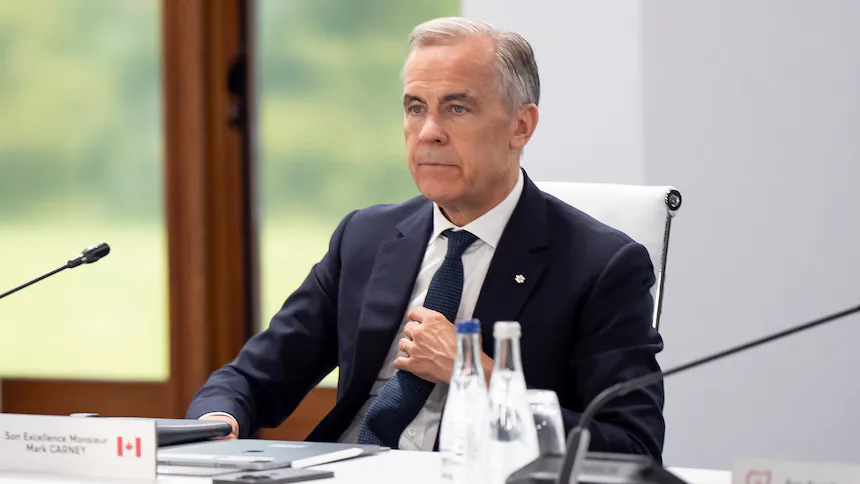
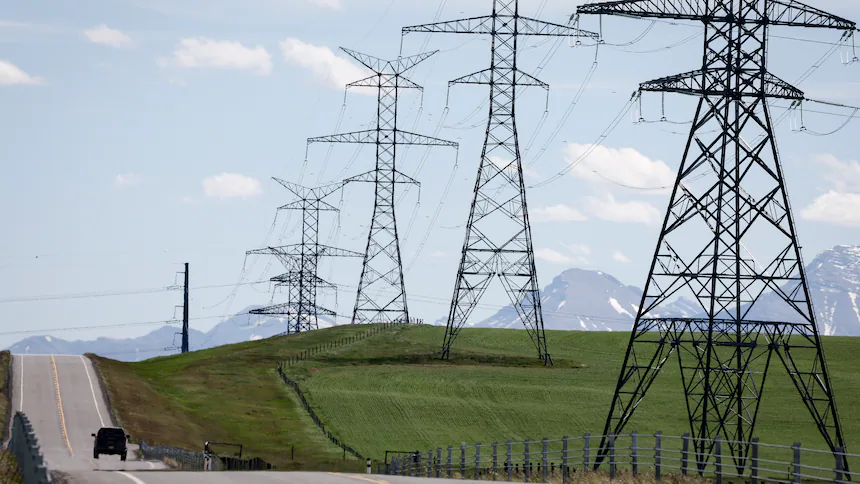
A new national strategy will double the capacity of the country’s electricity grid by 2050, Prime Minister Mark Carney said as he announced the plan Thursday.
“The path to affordability is electrification; the path to competitiveness is electrification; the path to net zero is electrification,” Carney said in Ottawa. “Electrification underpins everything, our emissions, our environment, our economy.”
According to a government statement, the plan, which is called Powering Canada Strong, will lower the cost of electricity for seven in 10 Canadian households by expanding the role that natural gas plays in the energy mix.
Powering Canada Strong says natural gas “has one of the lowest emissions intensities in the world,” which “allows natural gas to play multiple roles, including supporting peak demand, bolstering system reliability during periods of stress or low renewable output and meeting baseload generation needs.”
Baseload power typically refers to a power plant that provides continuous electricity output and ensures grid stability while peak power plants respond to fluctuations in grid demand.
Prime Minister Mark Carney announced a new national energy strategy to double Canada’s electricity grid by 2050 by expanding the role of natural gas. Carney says the Powering Canada Strong plan would also cut costs for most Canadian households.
The government also announced it will review and amend the previous Trudeau government’s controversial Clean Electricity Regulations (CER).
“The government of Canada intends to adjust the Clean Electricity Regulations to enable the sector to grow more rapidly across all provinces and territories by providing greater flexibility to offset residual emissions elsewhere,” the strategy says.
The Trudeau government finalized the Clean Electricity Regulations in 2024 with the goal of achieving deep emissions reductions in the electricity sector by 2050.
Carney said Thursday that his government is launching consultations with the provinces and territories, Indigenous Peoples, utilities and unions across the country.
“Over the next few months, we will work together to identify the actions needed to double our grid most effectively and affordably,” the government said in a statement.
Carney said that over the next four months, as the new electricity strategy is fine-tuned through consultations, it will be guided by four pillars.
The first pillar involves building infrastructure to increase the generation, transmission, distribution and storage of energy across the country. The consultations will try to find efficient ways to finance the building of infrastructure that keeps energy affordable.
The second guiding pillar to the new strategy will be the goal of connecting the country’s “fragmented grids” by expanding transmission lines and finding ways to break down barriers between provincial electricity grids.
The government says connecting disparate grids is important because Canada’s fragmented grids are “costing [the country] billions of dollars in outages, duplicative infrastructure and wasted power.”
The third pillar of the new strategy will focus on creating the skilled workforce needed to build Canada’s new electricity grid. Carney said it will take more than 130,000 highly skilled workers to build out the grid. The text of the plan says his government will work “with industry, labour and training partners to … attract and retain” the workers they need.
The final pillar of the plan is to manufacture more of the technology and components required to expand the grid in Canada.
Carney also said there is “no credible path to net zero” without ensuring that energy is affordable for Canadians.
Part of that affordability will be achieved, he said, by adjusting the clean electricity regulations and expanding some existing policies.
“That’s why we will expand support for energy saving retrofits for up to one million Canadian households through financing, grants and other complementary measures.”
Conservative Leader Pierre Poilievre dismissed Carney’s announcement on Thursday as old news.
“He re-announced the same electricity plan that the Liberals have used over the last decade to jack up the cost of power bills by 35 per cent,” Poilievre said while touring a facility in Concord, Ont., adding that Liberal government taxes and regulations have “blocked us from making the electricity we need.”
Pricing emissions and Trudeau’s electricity regulations
More than 80 per cent of Canada’s power grid is non-emitting thanks to hydro-electricity generation, nuclear and renewables like wind and solar.
But the previous Trudeau government feared that percentage could narrow as electricity demand grows and provinces turn to natural gas power generation to fill the gap.
The federal electricity regulations were supposed to have the biggest impact in Alberta.
Ever since Ottawa signed an energy deal with the province in November, those regulations have been in jeopardy. The agreement committed to immediately suspending the CER in Alberta “pending a new carbon pricing agreement.”
CBC News has reported that both the federal government and Alberta have recently reached a deal on pricing carbon emissions.
Major Projects Office may get involved
Multiple sources said Ottawa will recognize that it has a greater role to play in building transmission infrastructure that connects provincial and territorial grids to one another through what the industry calls massive transmission intertie.
Sources said the government is looking at if the Major Projects Office could get involved in this massive transmission infrastructure expansion.
The government is also considering referring several grid interconnection projects to the Major Projects Office for analysis to see if they could be designated under the Build Canada Act as projects in the national interest so they can be fast tracked, a source with knowledge said.
Ottawa proposes suite of measures to streamline project approvals, complete review process within 1 year
The future of electricity is wind and solar, new report says. Canada is lagging behind
Those projects that could be referred include interties between B.C. and Yukon, interties between the Atlantic provinces, as well as interties between Quebec and Newfoundland and Labrador.
According to sources, no new money is expected to be announced to fund these projects. But a source said the existing clean electricity investment tax credit could also be expanded.
A source said the government will be putting a call out to move toward more energy efficient methods to try to bring down costs for consumers.
Source: cbc