
Assahafa.com
The five freshly elected non-permanent members of the United Nations Security Council – Austria, Portugal, Kyrgyzstan, Trinidad and Tobago, and Zimbabwe – will assume their seats on January 1, 2027, replacing Denmark, Greece, Pakistan, Panama, and Somalia, whose mandates expire at the close of 2026.
For Rabat, the composition amounts to a tailor-made consolidation of the diplomatic architecture it has painstakingly erected around its southern provinces.
It represents the yield of a half-century of sovereign resolve, methodical coalition-building, and statecraft that has consistently outpaced, outflanked, and outlasted every obstruction thrown in its path; a constellation of allies not assembled by accident, but forged through decades of sovereign tenacity, institutional dexterity, and a foreign policy apparatus that has outmaneuvered every adversary dispatched against it.
For the Polisario Front – that fossilized relic of Cold War-era proxy warfare, a moribund Tindouf apparatus sustained not by popular legitimacy but by Algerian life support, petrodollars, and the fading sympathies of an ever-shrinking fellowship of ideological stragglers – the arithmetic is not merely unfavorable; it is merciless, terminal, and extinction-grade.
For its patron in Algiers, whose bankrolling of a defunct separatist enterprise has become the most expensive geopolitical vanity project on the African continent, the equation is no less brutal: decades of expenditure, diplomatic attrition, and strategic obstruction have yielded not leverage, but isolation.
Having wagered an entire regional doctrine on a separatist phantom that the world has progressively disowned, the military junta now watches as the Council’s incoming composition seals shut yet another corridor of diplomatic oxygen.
What little remained of their dwindling leverage inside the Council has not merely contracted; it has been asphyxiated by the very international order they once presumed would deliver them salvation.
The European flank is locked and loaded
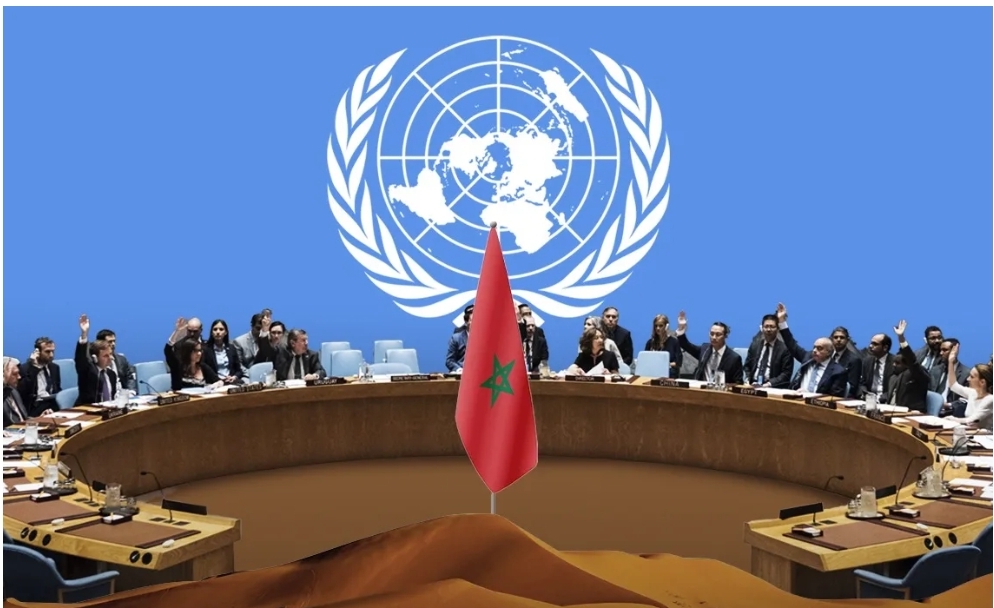
The bedrock of this recalibration is Resolution 2797, adopted on October 31, 2025, with 11 votes in favor, three abstentions, and Algeria – then an actual sitting member of the Council – conspicuously fleeing the chamber rather than casting a vote it knew would amount to nothing.
If Algiers itself could not obstruct the resolution from inside the room with a seat and a microphone, the notion that its finger-counted allies might alter the Council’s trajectory belongs not to diplomacy but to political satire.
That resolution did not merely renew MINURSO’s mandate; it redrew the conceptual boundaries of the entire Western Sahara file. For the first time in the Council’s institutional memory, Morocco’s 2007 Autonomy Plan was enshrined as the operative basis for negotiations – not one option among several, but the singular framework upon which any credible political settlement must rest.
The United States, as penholder, orchestrated the text; France, the United Kingdom, and a commanding majority ratified it. The referendum mirage, that perennial Polisario phantasm, was excised from the resolution’s operative language with surgical finality.
It is within this transformed doctrinal landscape that the incoming members must be appraised.
Austria and Portugal arrive at the horseshoe table not as unknown quantities but as declared adherents of the Moroccan position. Vienna, in an April 2026 joint communiqué with Rabat, characterized autonomy under Moroccan sovereignty as “one of the most viable solutions.” In the lexicon of Austrian diplomatic understatement, such language constitutes an unequivocal endorsement.
Austria simultaneously signed a strategic dialogue memorandum with Morocco, embedding its Sahara posture within a broader bilateral framework that transcends episodic goodwill.
Portugal, for its part, cemented its alignment as early as July 2025 when its foreign minister pronounced Morocco’s plan “serious, credible, and constructive,” echoing the exact triad of adjectives that the international consensus has progressively adopted.
Both nations voted in lockstep with the Council’s Resolution 2797 through their broader European alignment.
On January 29, 2026, all 27 EU member states adopted a unified position at the 15th EU-Morocco Association Council in Brussels, declaring that genuine autonomy under Moroccan sovereignty represents the most feasible solution to the regional dispute.
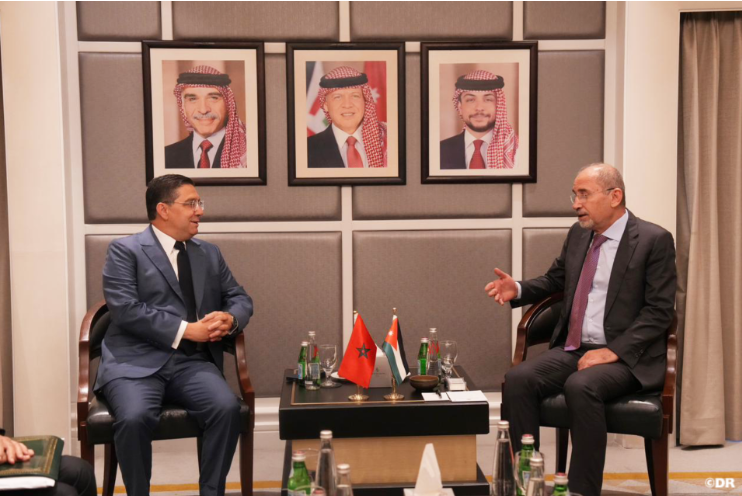
Co-signed by EU High Representative Kaja Kallas and Morocco’s Foreign Minister Nasser Bourita, this collective institutional verdict welcomed Resolution 2797 and its autonomy-centered negotiating framework.
Their simultaneous elevation to the Council in 2027 doubles the density of pro-autonomy European voices at the precise moment MINURSO’s mandate faces its next renewal.
The diplomatic siege is now airtight
Zimbabwe, the sole incoming member whose anachronistic dogma tilts toward the separatist thesis, warrants scrutiny but not alarm. Harare’s sympathy for the Polisario is rooted in pan-African liberation solidarity – an ideological artifact increasingly disconnected from the continent’s prevailing diplomatic current.
Nearly 40% of African Union member states have opened consulates in Laayoune and Dakhla, a gesture of sovereign recognition that no amount of Harare’s rhetorical nostalgia can neutralize. Zimbabwe, crucially, wields no veto. Its dissent, should it materialize during the October 2027 MINURSO vote, would register as a footnote against the structural majority that Resolution 2797 commands.
Kyrgyzstan and Trinidad and Tobago, meanwhile, embody the pragmatist calculus of the Global South. Neither carries historical baggage on the Sahara dossier; both represent constituencies – Central Asia and the Caribbean – where Morocco’s diplomatic groundwork has yielded tangible returns.
Port of Spain replaces Panama, itself a country that withdrew its recognition of the phantom “Sahrawi Republic.” Bishkek, entering the Council for the first time in its sovereign history, inherits no Polisario allegiances and arrives unburdened by Algerian lobbying infrastructure.
The broader cartography is unforgiving for the separatist enterprise. The roster of states recognizing the so-called “Sahrawi Arab Democratic Republic” has hemorrhaged from 84 at its Cold War apex to fewer than 28 today – nearly 50 revocations in two decades alone. Meanwhile, over 130 countries now endorse Morocco’s Autonomy Plan, and more than 30 consulates operate in Laayoune and Dakhla as sovereign facts on the ground.
The Polisario’s remaining international constituency can be tallied on diminishing fingers – a rump coalition of ideological holdouts whose geopolitical weight registers as negligible.
With Bahrain, Colombia, the Democratic Republic of Congo, Latvia, and Liberia – the five non-permanent members who assumed their seats in January 2026 – already seated alongside the three permanent Western allies who shepherded Resolution 2797 into existence, the Security Council’s deliberative center of gravity on the Sahara has migrated irreversibly toward the autonomy framework. The incoming quintet does not disrupt this trajectory; it entrenches it.
For Morocco, the task ahead is not to win new converts inside the Council – it has already achieved supermajority alignment – but to translate that institutional consensus into the definitive political settlement that Resolution 2797 demands. For the Polisario and its Algerian sponsors, the message inscribed in this electoral outcome is stark and unambiguous: the architecture of international legitimacy has been rebuilt, and they stand outside it.
Source: Morocco word news