
Assahafa.com
The Kingdom of Morocco continues to leverage decentralized international cooperation as a practical instrument for sharing experiences and expertise among local authorities, particularly with African counterparts, His Majesty King Mohammed VI affirmed.
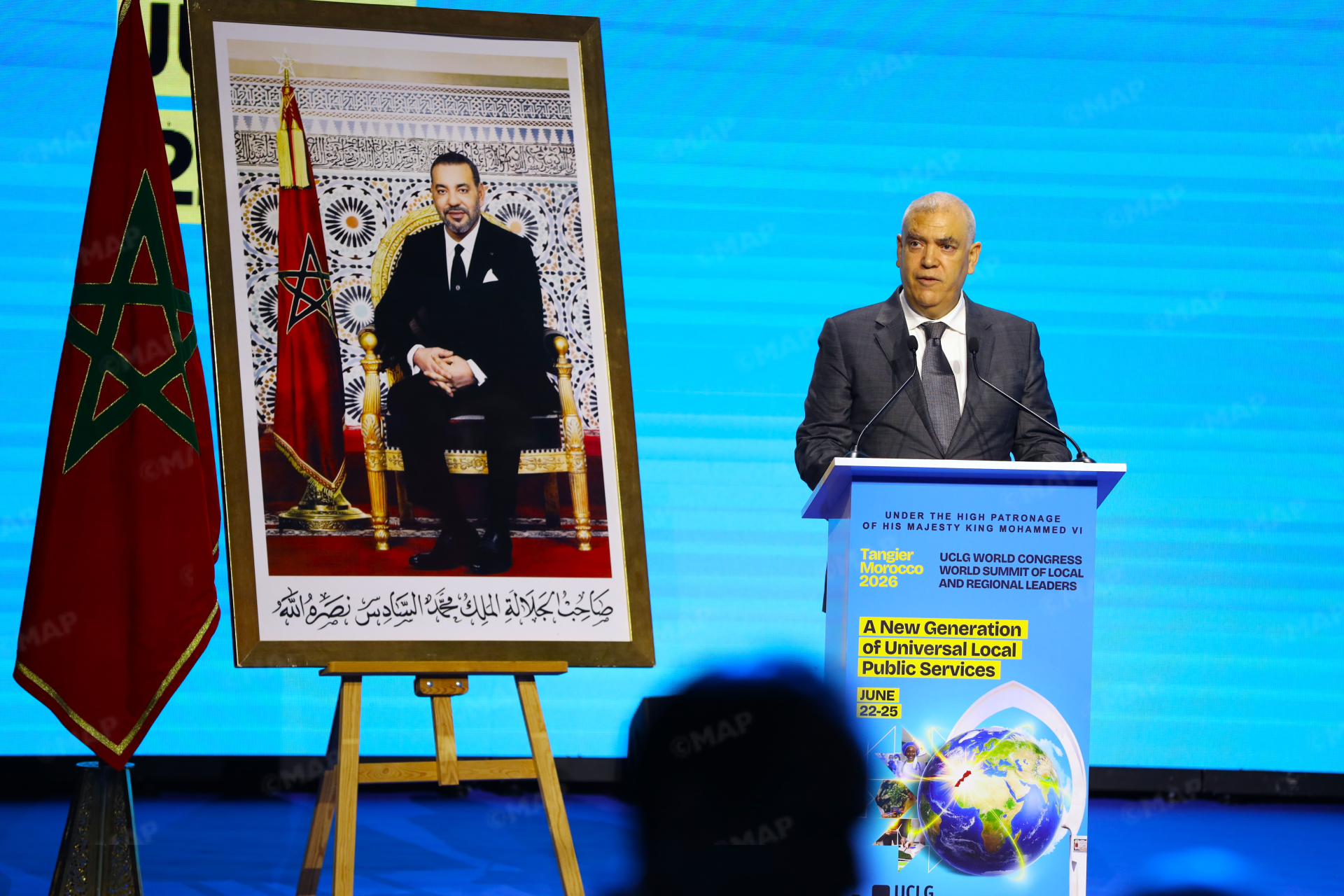
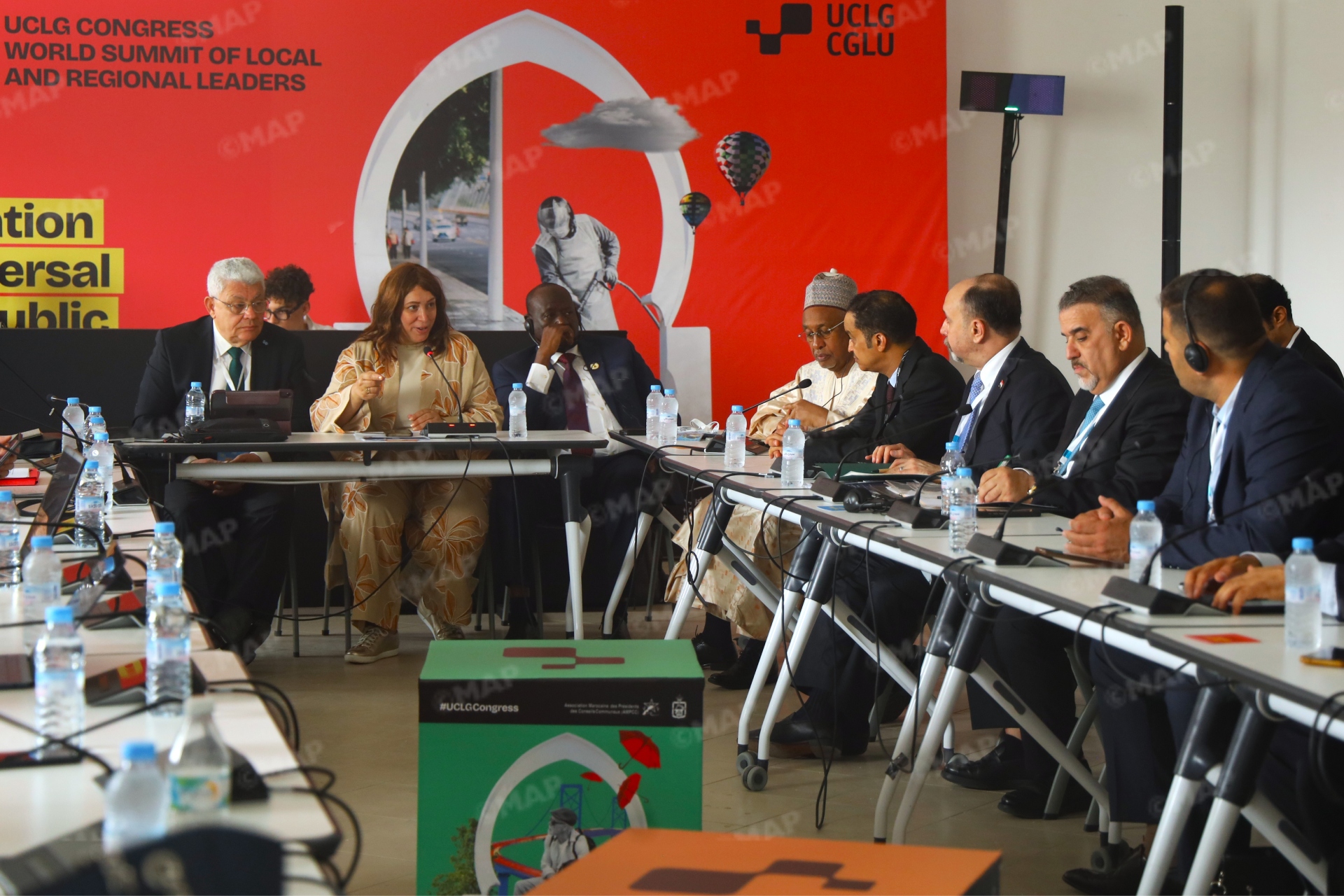
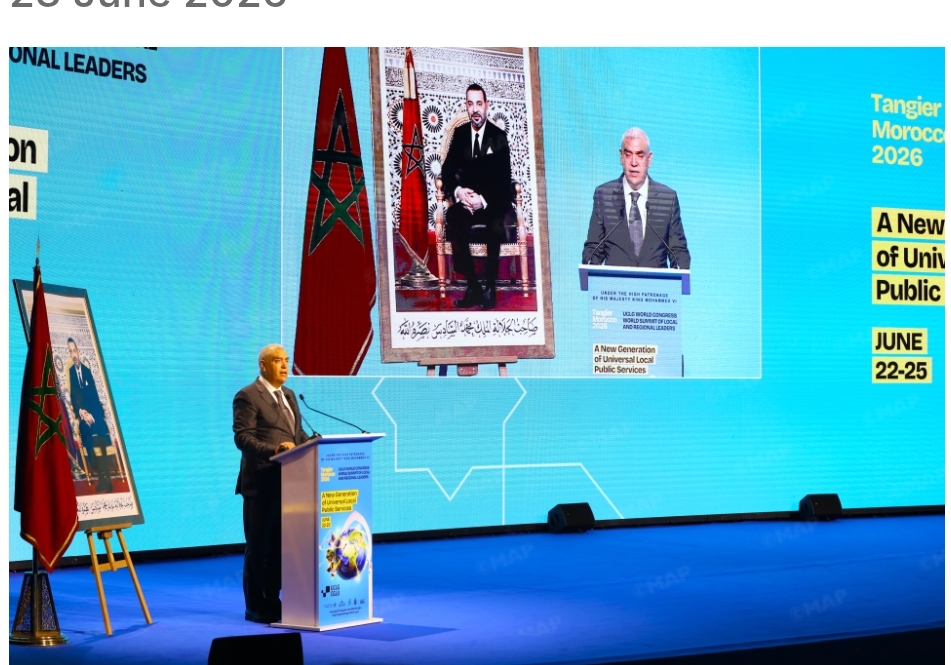
“This is done through the African support fund for international decentralized cooperation of local authorities. Since its establishment in 2020, the Fund has become an innovative mechanism for supporting impactful local partnerships and consolidating African cooperation based on local development, good governance, capacity building, and the exchange of expertise,” the Sovereign stated in an Address to participants at the 8th World Congress of United Cities and Local Governments (UCLG), whose official opening ceremony took place on Tuesday in Tangier.
Noting the particularly sensitive context in which this World Congress is taking place, His Majesty the King emphasized, in this Address read out by Minister of the Interior Abdelouafi Laftit, that current challenges “are showing, day after day, that the future is not built only by central decisions, but also through the involvement of the territories.”
“[It is indeed at this level that] public policies are implemented, bearing in mind the economic, social and environmental repercussions they have on such areas as education, health, housing, water, environment, transportation, culture, entertainment, and job creation,” the Sovereign underlined.
His Majesty the King also noted that the development dynamic in the Kingdom of Morocco is a reflection of our country’s Immutable Values, at the heart of the national consensus and the country’s stability and development.
In this regard, the Sovereign continued, “major development projects continue to be implemented in Our southern provinces in the Moroccan Sahara. They are turning these provinces into areas for growth and stability, making them a hub for the consolidation of African and Atlantic cooperation, based on a comprehensive vision rooted in solidarity, regional integration, and joint development.”
“In the same vein, the initiatives I have launched for the benefit of the African continent are part of an innovative vision of South-South cooperation. They include the initiative to enable Sahel countries to access the Atlantic Ocean, the African-Atlantic Gas Pipeline Project, and the African-Atlantic States Initiative,” HM the King pointed out.
The Sovereign noted that these initiatives are turning the continent’s Atlantic coast into a strategic space for cooperation and shared prosperity. They also reinforce Morocco’s role as a reliable actor and a committed partner for the achievement of integrated development in a stable Africa.
Referring to the Congress’s theme- “New Generation of Universal Local Public Services”- the Sovereign affirmed that it aligns, in its very essence, with “what we seek to achieve in the Kingdom of Morocco – namely to make sure territorial public policies serve the citizen, and to show that access to basic services is a citizen’s right, not a privilege determined by a person’s place of residence or social status.”
It is in this context that the discussion on the future of inclusive local public services, the new local social contract, territorial development financing, digital transformation, climate justice, and territorial diplomacy is particularly important, HM the King said.
According to HM the King’s Address, this debate calls for building a new relationship between governments, local communities, and citizens. This relationship is to be based on proximity, listening, consultation, transparency, participation, and care, reflecting a common public responsibility to achieve equitable, sustainable development.
In this regard, the Sovereign referred to the “100 Days of Local Multilateralism” initiative, which places the World Congress of United Cities and Local Governments at the center of an integrated international process and reflects a growing conviction that local and regional governments are no longer mere instruments for implementing international commitments.
“[They are now] full-fledged partners in shaping them, and a driving force for change within the global governance system,” His Majesty the King insisted.
Source: map