


Assahafa.com
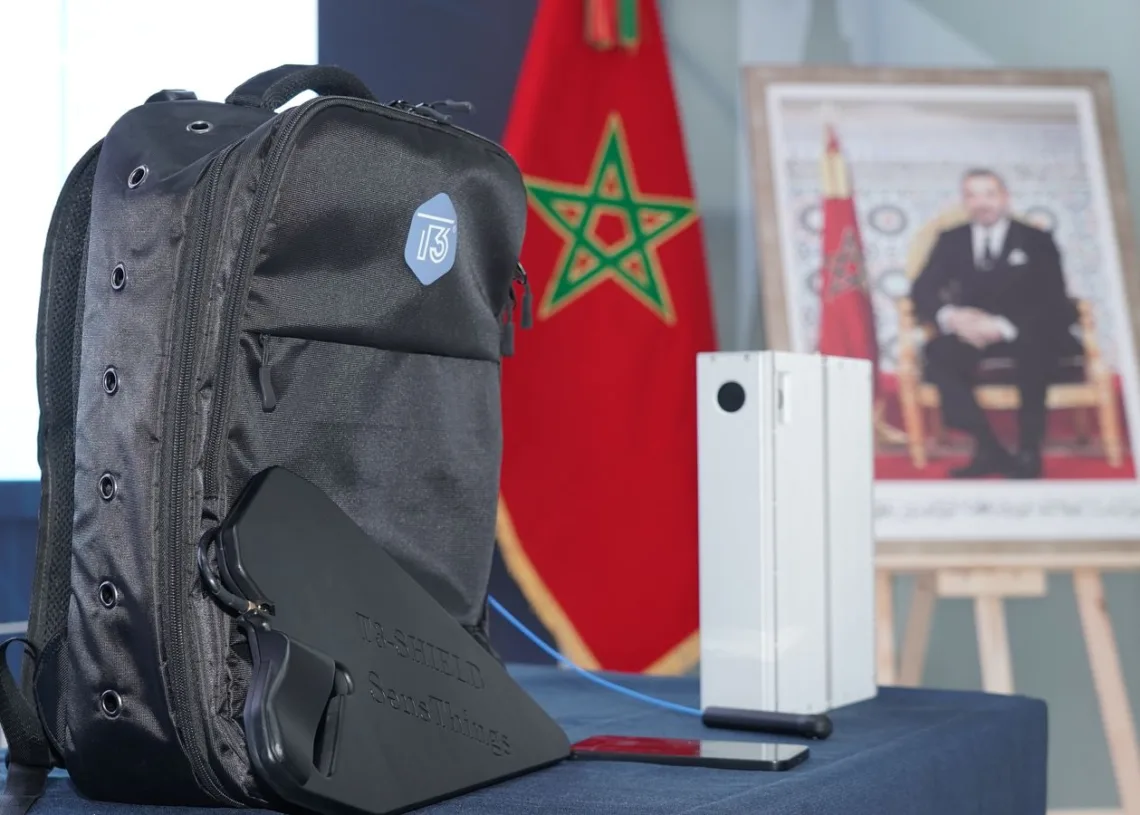
The Moroccan startup SensThings officially launched the production line of T3 Shield, a second-generation anti-cheating device designed to detect radio waves during exams. The launch took place on Friday, May 8, in the city of Skhirat.
The device is entirely conceived and manufactured in Morocco. SensThings, a spin-off of the Université Mohammed VI Polytechnique (UM6P), developed the system to combat fraud and electronic espionage during national examinations and public competitions.
T3 Shield is a compact, portable unit weighing less than three kilograms. It integrates Edge AI technology, allowing it to detect electronic devices autonomously without any cloud connection.
The device operates for up to six continuous hours, enough to cover an entire exam session. It offers four operational modes: room inspection, bag control, individual screening, and precise localization of suspicious signal sources.
The device will be deployed nationally starting in early June. It will equip more than 2,007 exam centers across the kingdom to secure this year’s baccalaureate exams, according to SNRTnews.
The system’s scope extends beyond the baccalaureate. It is designed for use in university exams, entrance competitions, and civil service recruitment tests. Any evaluation requiring integrity safeguards can mobilize the device.
The Skhirat production facility has a capacity of 250 units per day. This industrial scale reflects the size of the deployment planned for the coming weeks.
At the core of the T3 Shield sits a patented multi-frequency antenna filed under the Patent Cooperation Treaty (PCT). It can detect the full spectrum of mobile communications, including 2G frequencies commonly exploited in concealed cheating systems.
The device operates passively. It listens to the radio spectrum without emitting any signal, meaning it functions without jamming. This is a critical distinction as jamming is illegal in nearly all jurisdictions worldwide because it disrupts all communications, including emergency calls. T3 Shield avoids this legal exposure entirely.
The passive design also eliminates health concerns associated with jammers, which release continuous, powerful signals in confined spaces.
In April, SensThings obtained the ANSI/IEEE Std149 certification for the device’s antenna systems. The certification was delivered by BTL Inc., an accredited laboratory based in Dongguan, validating the antenna components against international measurement standards used by government, industrial, and academic institutions.
A bid to address Morocco’s rampant exam fraud
SensThings was founded in 2022 within UM6P’s Digital Innovation Center for Excellence (DICE). It is backed by UM6P Ventures and has a headquarters in Benguerir and an industrial site near Rabat. The company has secured over 15 million exam copies through its broader T3 platform.
It won the World Summit Award in 2024, a gold medal at IFME Kuwait in 2025, and the Industrial Startup of the Year award in 2025. Its clients include Morocco’s Ministry of National Education and Ministry of Higher Education, OCP Group, and several national and international academic institutions.
The deployment comes amid rampant exam fraud in Morocco. During the 2025 baccalaureate, the DGSN arrested 118 individuals, including 16 women and 12 minors, for involvement in cheating as organizers, accomplices, or participants.
Security forces seized 98 mobile phones, 87 earpieces, 641 batteries, seven laptops, and 28 internet connection devices. Authorities noted a marked increase in the use of artificial intelligence tools, including ChatGPT, in cheating attempts.
Under Law 02.13, those caught cheating face automatic zero scores, exam bans of up to two years, and prison sentences ranging from six months to five years with fines between MAD 5,000 ($500) and MAD 100,000 ($10,000).
Source: Morocco word news