

Assahafa.com
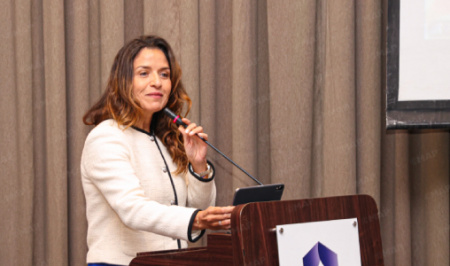
The Minister of Energy Transition and Sustainable Development, Leila Benali, stressed, on Sunday in Nairobi, that the Congo Basin Climate Commission (CBCC), initiated during COP22 in Marrakech under the impetus of His Majesty King Mohammed VI, stands out as a structuring framework, carrying an ambitious African vision based on solidarity, shared responsibility, and the sustainable valorization of African natural capital.
Speaking during the CBCC ministerial meeting, Benali stated that this meeting is part of the preparations for two major upcoming events, namely the session of Heads of State and Government scheduled for May 12 in Nairobi and the donors’ round table scheduled for May 26 in Brazzaville, dedicated to financing the investment plan of the Blue Fund for the Congo Basin.
She noted that the progress made in recent months, particularly regarding the structuring of a portfolio of priority projects aligned with national development plans, the strengthening of the governance framework, as well as the growing engagement of technical and financial partners, testify to a credible and impactful dynamic.
However, Benali recalled that the success of this approach remains dependent on the collective capacity to take a new step forward, moving from commitments and strategies to the effective implementation of investments, insisting on the need to carry a common, coherent, and ambitious vision.
She also recalled that the year 2026 holds particular significance, marking the tenth anniversary of the creation of the Congo Basin Climate Commission, as well as the first anniversary of the Marrakech Declaration/ESG Mining Framework, developed with African Ministers of Mines to promote a sustainable mining sector with an African definition.
In this regard, she cited the Blue Fund for the Congo Basin as an illustration of the continent’s capacity to design financial instruments adapted to its realities and development priorities, noting that it embodies a new generation of African mechanisms based on the sustainable valorization of natural capital and oriented toward high-impact investments.
In this sense, she highlighted the dynamic of progressive transformation undertaken on the continent, marked by the development of national carbon strategies, the integration of Article 6 mechanisms of the Paris Agreement, and the rise of regional initiatives.
Benali noted that this evolution reflects a strong desire to strengthen the continent’s sovereignty over the valorization of its natural capital, specifying that the carbon market should not be perceived solely as a financial instrument, but also as a lever for climate justice guaranteeing concrete benefits for local communities.
Furthermore, Benali indicated that Morocco has chosen to act through an integrated and innovative approach, raising the mitigation ambition of its Nationally Determined Contribution (NDC 3.0) to 53% by 2035, through a portfolio of 90 projects, while strengthening its resilience and adaptation through 107 projects covering ten sectors.
She explained that the Moroccan experience with the NDC 3.0 relies on a results-oriented approach, combining climate ambition, economic efficiency, and social co-benefits, notably through the use of tools such as the internal rate of return and the average sectoral abatement cost in order to optimize climate investments.
She added that the NDC 3.0 reflects a clear desire to transform climate commitments into genuine levers of development, thanks to a territorialized approach guaranteeing a distribution of investments adapted to the specificities and priorities of each region.
The Minister also recalled that this strategy, anchored in the National Sustainable Development Strategy and aligned with the Sustainable Development Goals, relies on the Climate Finance Development Strategy up to 2030, which recognizes the decisive role of the private sector.
In this dynamic, she stated that significant efforts have been deployed to integrate climate issues into public finances, notably through aligning the NDC 3.0 projects with the Three-Year Budgetary Programming, setting up a tagging and monitoring system for climate expenditures, as well as developing a green taxonomy and green bonds intended for financing public investment.
Furthermore, Benali stressed that Morocco aligns its climate action within the framework of advanced regionalization, consistent with the priorities defined by the Regional Development Plans.
In this regard, the Kingdom has set up several structuring tools, notably the twelve Territorial Climate Plans and the six Regional Adaptation Plans, making it possible to fully integrate the climate dimension into territorial planning and to valorize the specific assets of each region, she recalled.
Source: map